A small border tells the truth quickly. There is no deep background where a weak plant can disappear, no long sweep of planting to distract from a poor choice, and no room for flowers that look wonderful for one week and then leave a hole. That can feel unforgiving, but it is also useful. When every plant is visible, a good plant has more power.
The question is not simply whether a flower is pretty. In a small border, the question is what else it does. Does it bring scent when you pass? Does the foliage stay clean after bloom? Does it feed pollinators? Does it give a stem for a vase? Does it repeat a shape that makes the bed feel designed?
A flower that earns space does more than decorate. It carries more than one job without asking the border to become bigger than it is.
Small borders often fail because color is chosen first. Color sells plants at the nursery, but structure is what keeps the border from looking empty after the first flush. Before buying anything, look at the bed and decide where it needs height, softness, upright lines, low edging, and foliage that still looks decent without flowers.
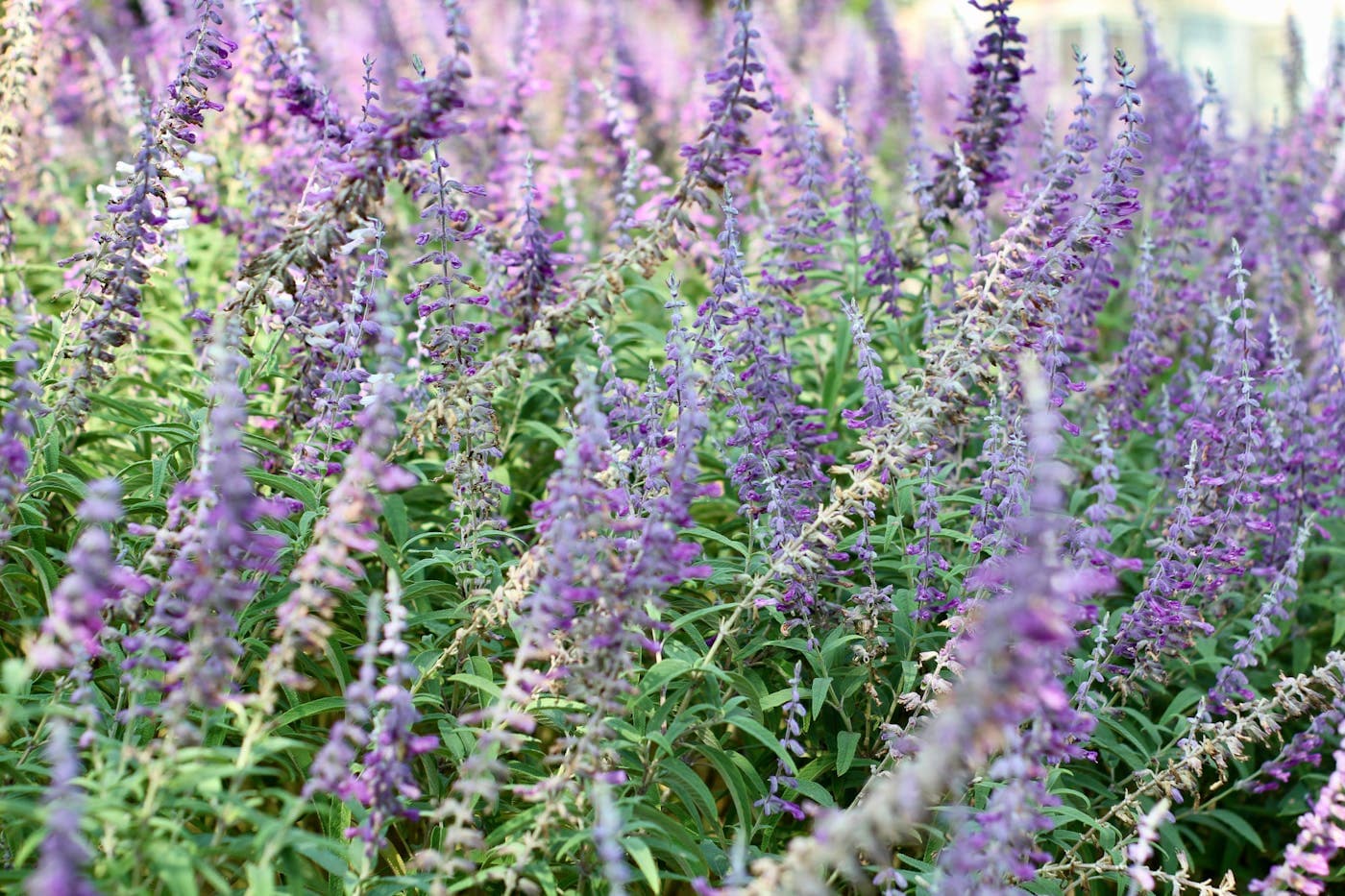
Salvia is one of the easiest structural flowers for sun. The spikes create vertical rhythm, and the plant can be repeated without feeling heavy. Catmint softens edges and brings a haze of blue-purple bloom, but it needs room to flop politely. Dianthus stays lower and neater near paths. Lavender gives scent and evergreen or semi-evergreen presence in the right climate and drainage.
Once those roles are clear, color becomes easier. You are not buying flowers at random. You are filling jobs.
Salvia and catmint are useful together because they solve opposite problems. Salvia stands up. Catmint relaxes. One gives punctuation, the other gives softness. In a small sunny border, that contrast can make a simple planting feel layered even if the plant list is short.
Repeat salvia in two or three small groups instead of placing one spike in the middle like a flag. Let catmint sit where it can spill slightly without covering a walkway. If the catmint opens up or looks tired after bloom, shear it back. That one cut often gives cleaner foliage and sometimes a second lighter flush.
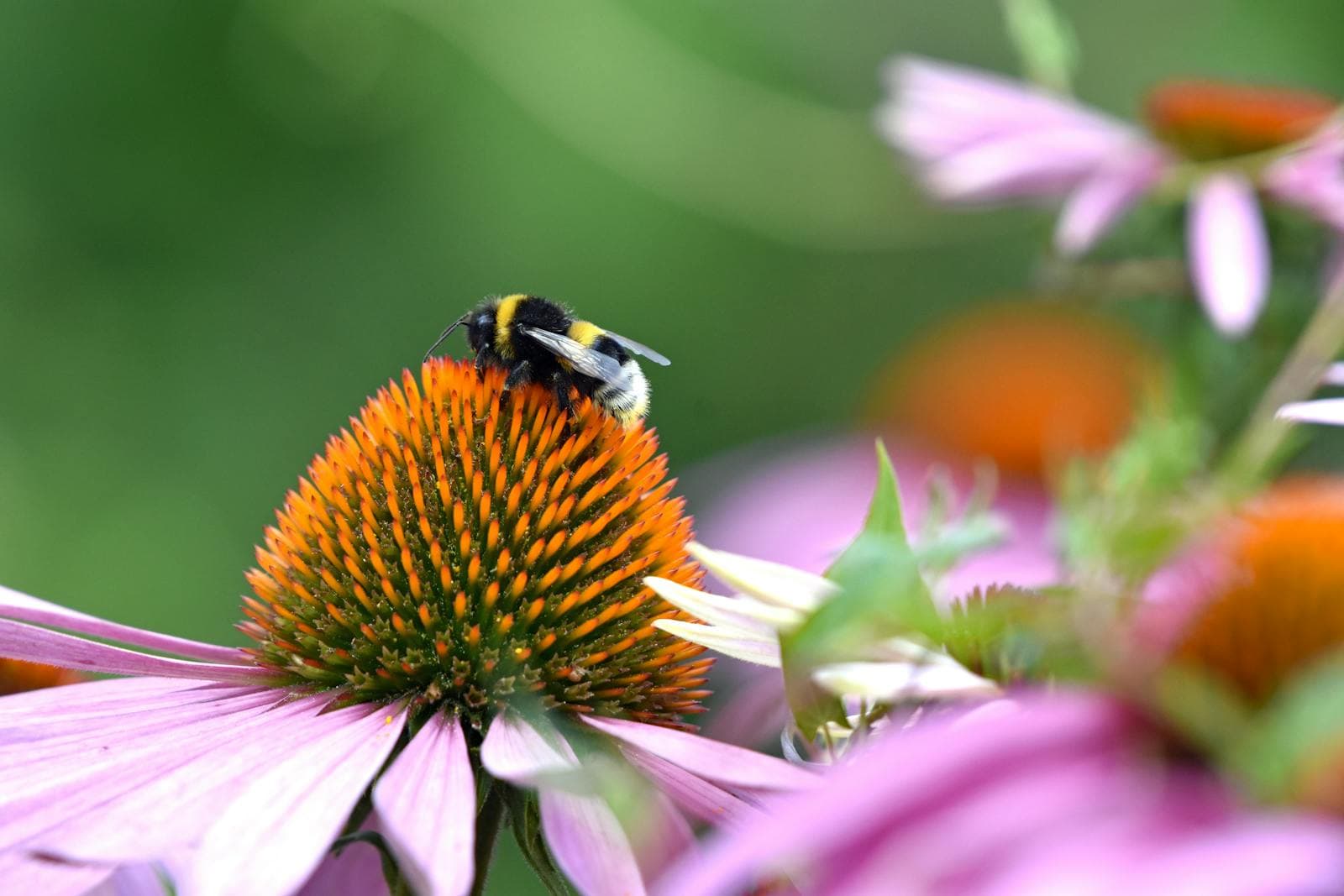
Both plants are also good pollinator flowers, which matters when space is limited. A small border may not be habitat on a large scale, but it can still be visited constantly if the flowers are useful.
The front of a small border is inspected more than admired. People see it while unlocking a door, stepping out of a car, or walking past with a hose. That is why edging flowers need good manners. They should not collapse over the path every time it rains, and they should not look awful the moment bloom pauses.
Dianthus earns its place here because the foliage is tidy and the flowers bring scent at a height people can notice. Sweet alyssum can work as a seasonal softener where the edge needs to look full quickly. Low calendula can be cheerful in a looser cottage border, especially when you are willing to deadhead it.
The edge does not have to be formal. It has to be readable. A clear front edge lets the middle of the border be more abundant without making the whole bed feel messy.
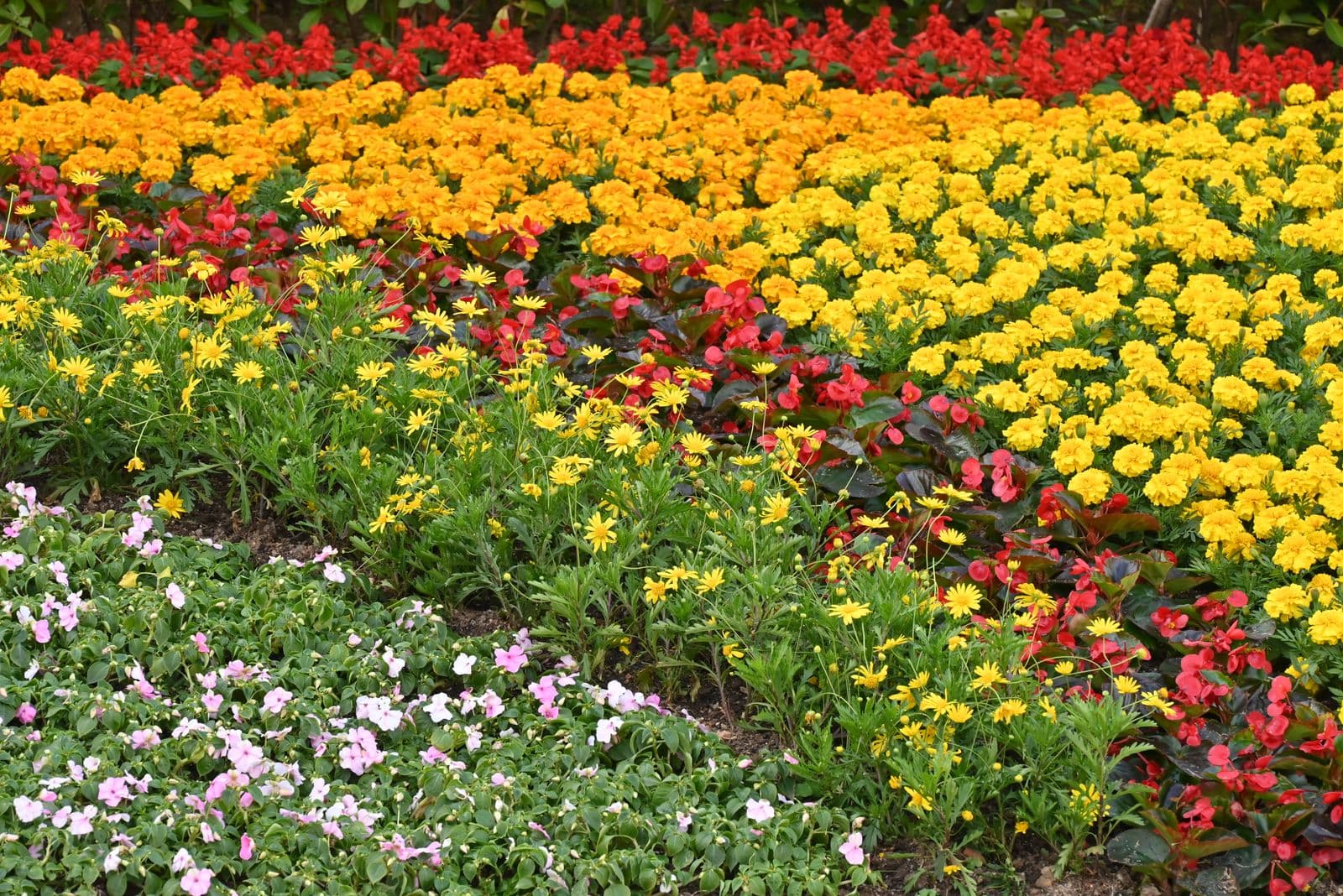
Annuals are valuable in small borders because they give quick bloom while permanent plants mature. The danger is letting them become the whole design every year. If you fill every gap with whatever is blooming at the nursery, the border never develops a stable shape.
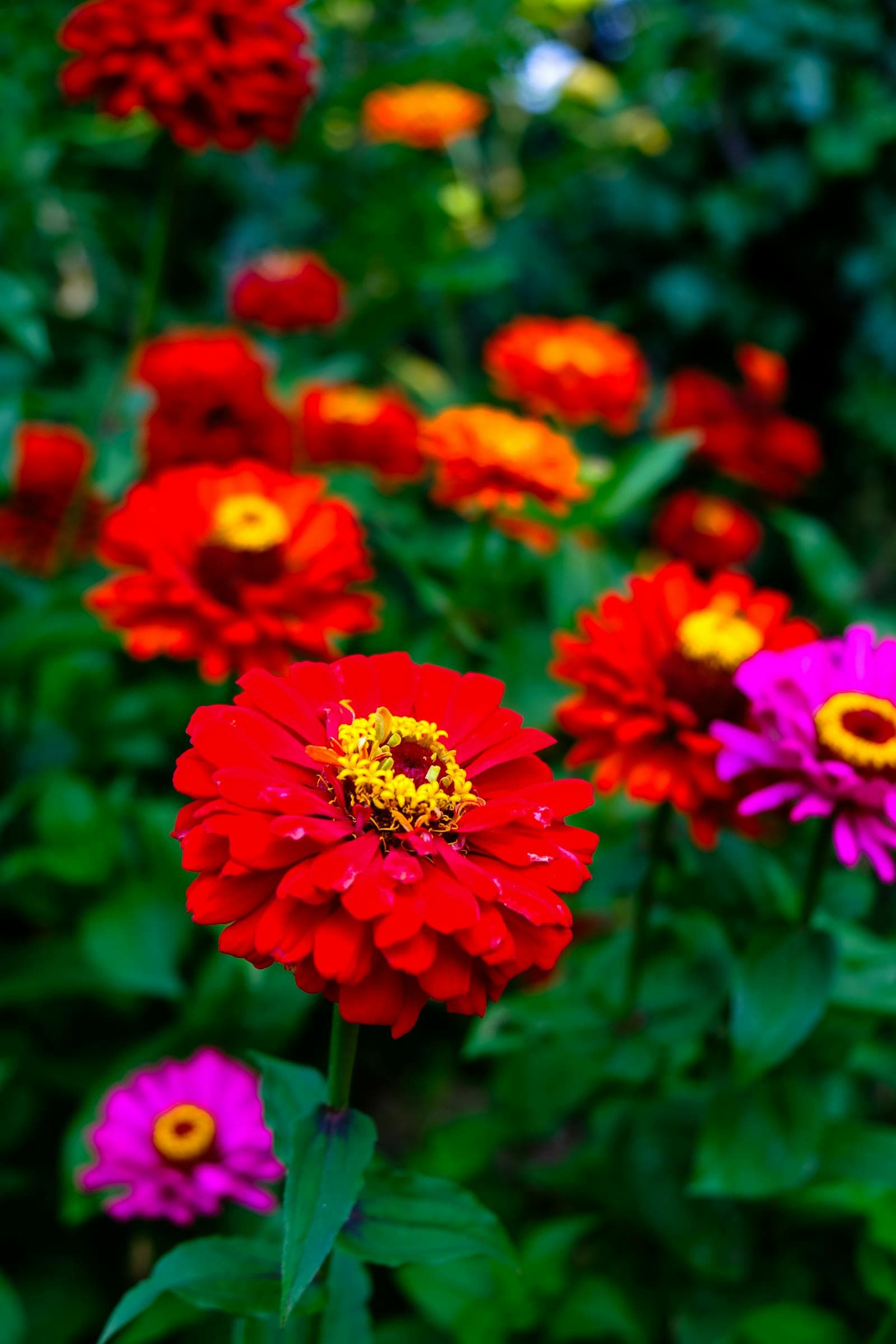
Dwarf zinnias, calendula, and compact marigolds are better choices than tall loose annuals where space is tight. They bring color without swallowing neighboring plants. Use them in repeated pockets rather than scattering singles. A small border can handle brightness if the brightness has a pattern.
Annuals also let you test color before committing. If apricot zinnias make the border feel warmer, you can repeat that color later with roses or perennials. If orange calendula fights the brick or siding, you have learned the lesson in one season instead of living with it for years.
Scent is wasted at the back of a small border no one approaches. Put fragrant plants near a step, gate, chair, or path. Lavender, dianthus, scented geraniums in a pot, and some compact roses can make a small planting feel richer than its size because they give the garden another sense to work with.
Lavender is only worth using where the conditions suit it. It wants sun, drainage, and air. In heavy wet soil, it sulks or dies, and a dead lavender plant earns no space at all. If your border is damp, choose a different scented role instead of forcing the romance.
Compact roses can earn their place when they repeat bloom, keep a manageable shape, and do not demand constant rescue. In a very small border, one good rose is better than three weak ones. Give it room to be seen from all sides and underplant lightly so air can move.
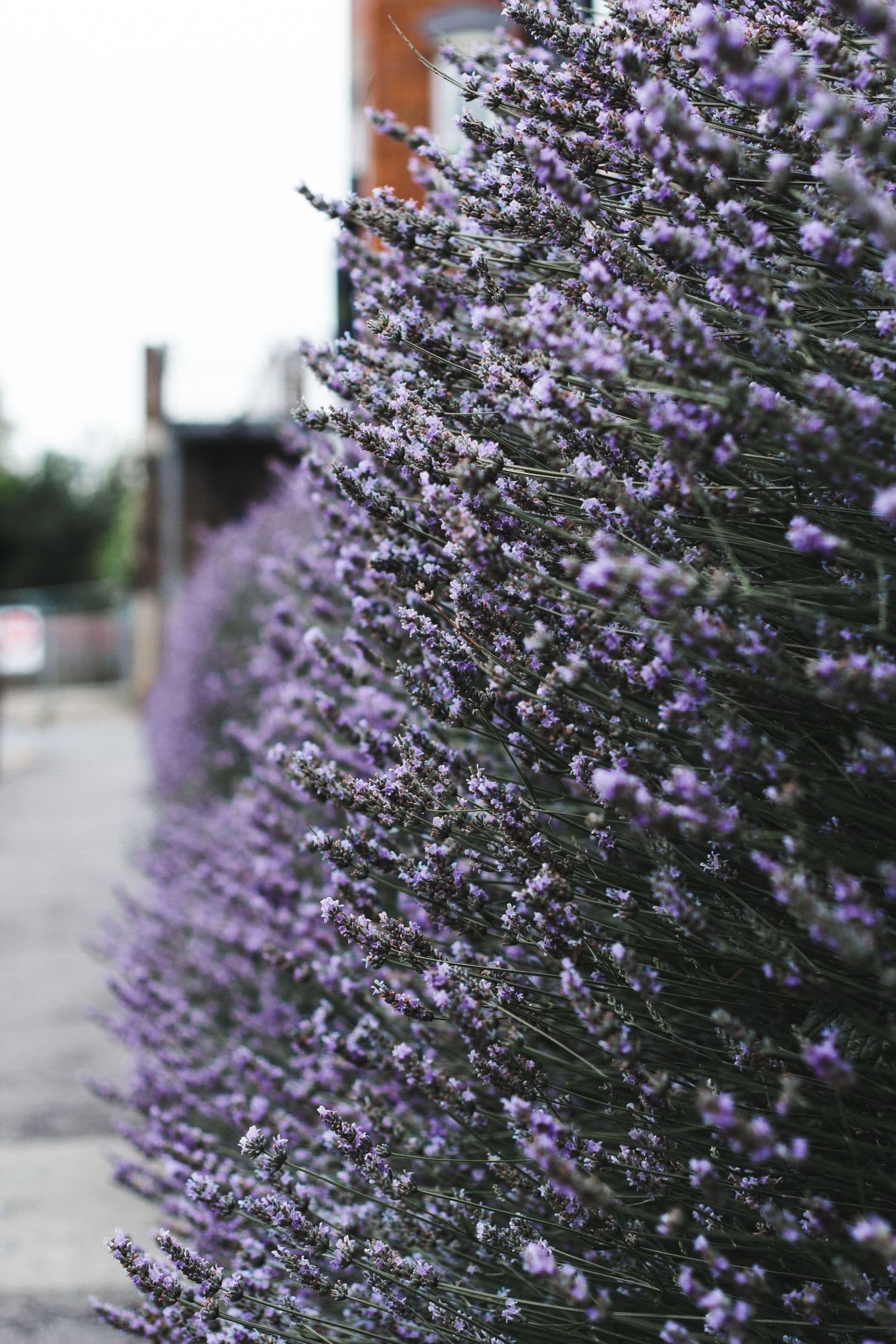
Foliage is what remains when flowers take a break. In a small border, that break is visible. Heuchera, ornamental oregano, lavender, dianthus, and even the clean leaves of healthy salvia can help the bed look composed between bloom cycles.
Heuchera is especially useful where flowers alone would not carry the light conditions. It is grown more for foliage than bloom, but the small flower stems can still bring delicacy and pollinator interest. Ornamental oregano can soften edges with texture and late-season color, especially in dry sunny spots.
The point is not to turn a flower border into a foliage border. The point is to stop treating foliage as an afterthought. A small border with decent leaves can survive the pauses. A small border made only of peak flowers looks wonderful in the cart and thin in the ground.
Once a month in the growing season, stand back and ask what each plant is doing now. Not what it promised on the tag. Not what it did three weeks ago. What is it contributing today? Bloom, scent, foliage, height, pollinator value, stem strength, edge softness, or structure are all valid answers.
If a plant has no answer for most of the season, it may not deserve space in a small border. That sounds severe, but limited space requires honesty. Move it, give it one more season if it is establishing, or replace it with something that solves a real problem.
This review also keeps you from overbuying. Many small borders do not need more plants. They need one repeated plant, one better edge, one gap filled with an annual for the season, or one tired plant removed so the useful ones can breathe.
Before buying a flower for a small border, imagine it after the main bloom has passed. If the answer is bare stems, floppy leaves, and no useful shape, it may still be a fine plant, but it needs a larger setting or better companions. In a small border, every purchase should pass a harder test.
Ask where it will sit, what it will repeat, what it will look like from the path, and what job it still does when the flowers are gone. If you cannot answer, leave it at the nursery for now. A small border improves faster through disciplined choices than through rescue missions.
The reward is a planting that feels full without feeling crowded. Salvia gives rhythm, catmint softens, dianthus finishes the edge, annuals keep color moving, lavender or roses add scent where conditions fit, and foliage carries the pauses. The border stays small, but the plants inside it stop acting small.